
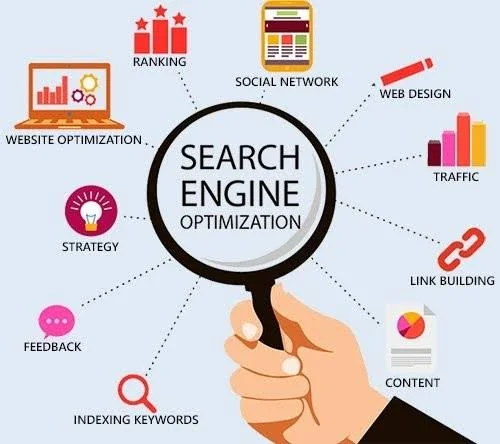
What Is SEO and How Does It Work? A Complete Guide for Beginners
Have you ever wondered why some websites appear at the top of Google while others remain difficult to find? The answer often comes down to SEO (Search Engine Optimization).
SEO helps businesses, bloggers, freelancers, and website owners improve their visibility in organic search results. When done correctly, SEO can help you attract people who are already searching for information, products, or services related to your business.
What Is SEO?
In this guide, you will learn what SEO is, how SEO works, its benefits, different types of SEO, and the best SEO practices beginners should follow.

SEO, or Search Engine Optimization, is the process of improving a website so that it can appear more prominently in relevant organic search results.
When someone searches for something on Google, the search engine analyzes billions of webpages to find results that are relevant and useful for that query. SEO helps search engines understand your website and helps users discover your content.
For example, if someone searches for “digital marketing freelancer in Surat,” websites that provide relevant information and have strong SEO may have an opportunity to appear in the search results.
Unlike paid advertising, organic SEO traffic does not require you to pay Google for every click.
How Does SEO Work?
To understand what is SEO and how does it work, you first need to understand three basic processes: crawling, indexing, and ranking.
1. Crawling
Search engines use automated programs called crawlers or bots to discover webpages.
These crawlers follow links from one webpage to another and collect information about websites and their content.
For example, when you publish a new blog post and it can be accessed by search-engine crawlers, Google may discover that page through internal links, external links, or other discovery mechanisms.
2. Indexing
After discovering a webpage, a search engine processes and stores information about it in its index.
Think of Google’s index as a huge digital library. If a page is eligible to be indexed, its information can potentially be considered when someone performs a relevant search.
However, being indexed does not automatically mean that a page will rank highly.
3. Ranking
When someone searches for a query, search engines determine which indexed pages are most relevant and useful for that search.
Various signals can influence how pages are ranked, including relevance, content quality, website accessibility, links, usability, and other systems used by search engines.
For example, if someone searches for “SEO expert in Surat,” Google may evaluate many pages to determine which ones best satisfy the user’s search intent.
Why Is SEO Important?
SEO is important because people often use search engines to find answers, products, businesses, and services.
A well-optimized website can help you:
- Increase organic visibility
- Attract relevant website visitors
- Generate potential leads
- Build online credibility
- Improve brand awareness
- Reach people actively searching for your offerings
- Create long-term opportunities for organic traffic
SEO is not an overnight marketing strategy. Results can take time and depend on factors such as competition, website quality, content, authority, technical health, and the search queries you target.
What Are the Different Types of SEO?
SEO can be divided into several important areas.
1. On-Page SEO
On-page SEO focuses on optimizing elements on your website.
It includes:
- Keyword research and optimization
- Page titles
- Headings
- Meta descriptions
- Content structure
- Internal linking
- Image optimization
- Search intent
- URL optimization
The goal is to make your content easier for both users and search engines to understand.
2. Technical SEO
Technical SEO focuses on the technical foundation of your website.
Important areas include:
- Website crawlability
- Indexing
- XML sitemap
- Robots.txt
- Canonical tags
- Mobile usability
- Website speed
- HTTPS
- Website architecture
A technically healthy website gives search engines a better opportunity to discover, understand, and access your content.
3. Off-Page SEO
Off-page SEO involves activities outside your website that can contribute to your website’s authority and reputation.
One important area is backlinks—links from other websites to your website.
Other activities can include:
- Digital PR
- Relevant link building
- Brand mentions
- Content promotion
- Building relationships within your industry
The focus should be on earning relevant, high-quality links rather than collecting large numbers of low-quality backlinks.
4. Local SEO
Local SEO helps businesses improve visibility for searches connected to a specific location.
For example:
- “SEO expert in Surat”
- “digital marketing agency in Surat”
- “restaurant near me”
Local SEO can involve optimizing your Google Business Profile, maintaining accurate business information, creating locally relevant content, and building your local online presence.
How Do Search Engines Decide Which Pages Rank?
Search engines use sophisticated systems to determine which results are most useful for a particular search.
Some important considerations include:
Relevance
Does the webpage actually address what the user is searching for?
Search Intent
What does the user really want to accomplish with the search?
For example, someone searching “what is SEO” probably wants an explanation, while someone searching “SEO services in Surat” may be looking for a service provider.
Content Quality
Useful, original, accurate, and well-organized content can provide a better experience for users.
Website Accessibility
Search engines need to be able to access and understand important webpages.
Links and Authority
Relevant links and references can contribute to how search engines understand a website’s reputation and relationships within a topic.
There is no single SEO technique that guarantees the #1 position on Google. Successful SEO usually requires a combination of content, technical improvements, relevance, authority, and continuous optimization.
What Are the Benefits of SEO?
A strong SEO strategy can provide several benefits:
1. More organic visibility: Your website can become more discoverable for relevant searches.
2. Qualified traffic: SEO can attract visitors who are actively looking for topics, products, or services related to your business.
3. Better credibility: Consistently appearing for relevant searches can help strengthen your online presence.
4. Long-term opportunities: Well-performing content can continue attracting organic visitors over time.
5. Better customer understanding: Keyword research and search data can reveal what your potential customers are looking for.
6. Support for business growth: Organic visibility can contribute to enquiries, leads, sales, and brand awareness when combined with a strong website and conversion strategy.
SEO Best Practices for Beginners
If you are new to SEO, start with these fundamentals:
- Understand search intent before creating content.
- Research relevant keywords instead of choosing keywords randomly.
- Create helpful and original content that answers the user’s question.
- Optimize page titles and headings so the topic is clear.
- Use internal links to connect related pages.
- Optimize images with descriptive file names and appropriate alt text.
- Make your website mobile-friendly and easy to navigate.
- Improve website speed and technical accessibility.
- Earn relevant backlinks instead of buying low-quality links.
- Update important content when information changes.
- Monitor performance using appropriate SEO and analytics tools.
Most importantly, avoid writing content only to insert keywords. Create content for people first and optimize it for search engines naturally.
How to Start SEO as a Beginner
You don’t need to learn everything about SEO in one day. Follow a step-by-step approach:
Step 1: Learn basic SEO concepts.
Step 2: Understand keyword research and search intent.
Step 3: Learn on-page SEO.
Step 4: Understand technical SEO fundamentals.
Step 5: Learn about backlinks and off-page SEO.
Step 6: Practice SEO on your own website.
Step 7: Measure your performance and continuously improve.
Practical experience is one of the best ways to understand how SEO works.
Common SEO Mistakes Beginners Should Avoid
Many beginners make the same mistakes when starting SEO.
Keyword Stuffing
Using the same keyword excessively can make content difficult to read and does not create a better user experience.
Copying Content
Simply copying content from other websites provides little original value.
Ignoring Search Intent
Targeting a keyword without understanding what the searcher actually wants can result in content that does not satisfy the query.
Buying Low-Quality Backlinks
Large numbers of irrelevant or manipulative links can create risks instead of improving your website.
Ignoring Technical SEO
Even great content can struggle if important pages cannot be properly accessed, crawled, or indexed.
Expecting Instant Results
SEO generally requires consistent effort, testing, monitoring, and improvement.
Frequently Asked Questions
What is SEO in simple words?
SEO is the process of improving a website so that it can become more visible in relevant organic search results and attract useful visitors.
How does SEO work?
SEO works by improving a website’s content, technical accessibility, relevance, usability, and authority so search engines can better understand and evaluate its pages.
Is SEO free?
Organic search traffic itself does not require paying Google for each click. However, SEO can require investment in tools, content creation, technical work, expertise, and ongoing optimization.
How long does SEO take to show results?
There is no fixed timeframe. SEO results can vary depending on competition, website history, content quality, technical issues, authority, and the keywords being targeted.
Can beginners learn SEO?
Yes. Beginners can learn SEO by starting with fundamentals such as keyword research, search intent, on-page SEO, technical SEO, content optimization, and link building.
What are the main types of SEO?
The main areas include on-page SEO, technical SEO, off-page SEO, and local SEO.
Is SEO better than Google Ads?
Neither is automatically better. SEO focuses primarily on organic visibility, while Google Ads provides paid search advertising. Businesses may use either or combine both depending on their goals and budget.
Final Thoughts
So, what is SEO and how does it work? SEO is the process of improving your website so search engines can better understand its content and users can discover it through relevant organic searches.
The fundamentals are straightforward: understand what people are searching for, create genuinely useful content, maintain a technically accessible website, build credibility, and continuously improve based on data.
If you are looking for professional digital marketing services, you can explore Skyline Digital to learn more about its services and approach. You can also explore the available digital marketing services to see how SEO can fit into a broader digital marketing strategy.
SEO is a long-term process, but learning the fundamentals and consistently applying them can give your website a stronger foundation for sustainable organic visibility.